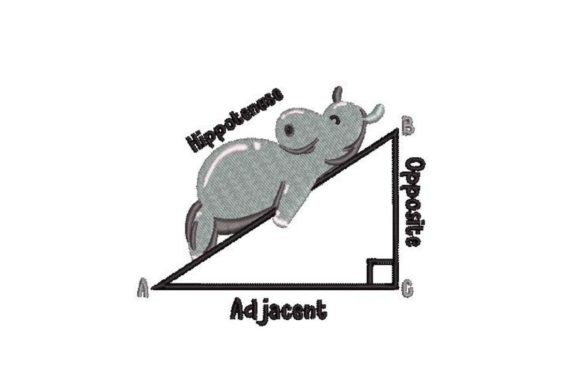
Hippotenuse Triangle: A Math-Inspired Embroidery Design for Small Business Merch
As an embroidery designer who has reviewed hundreds of machine embroidery design files for small business merchandise, I was intrigued when I first encountered Hippotenuse Triangle. The playful name immediately tells you this is not your typical back-to-school embroidery file. It is a design that blends humor with education, making it a strong candidate for custom apparel, embroidered patches, tote bags, and branded merchandise aimed at families, teachers, and math-loving kids. In this review, I will walk through how this design performs in real business use, where it shines, and what you need to consider before adding it to your product lineup.
First Impressions: Playful, Smart, and Surprisingly Versatile
My first reaction to Hippotenuse Triangle was that it strikes a rare balance between being genuinely funny and visually clean. The design leans into a friendly, handmade aesthetic that feels approachable rather than overly technical. For a small business owner looking to create machine embroidery design products that stand out, this design offers a conversational hook. It is not just a shape—it is a pun that invites smiles and second looks.
From a brand identity standpoint, Hippotenuse Triangle feels modern yet rustic, with a playful edge that suits boutiques, creative studios, bakeries, florists, and even pet brands that want to show a quirky side. It could easily become a signature motif on apron embroidery for a café that celebrates learning, or on cap embroidery for a local bookstore. The design reads as both premium and approachable, which is a sweet spot for small business merch.
Real Business Use: From Patches to Tote Bags
When I test a design for commercial use, I imagine it across multiple product types. Hippotenuse Triangle is surprisingly flexible. Here is how I see it performing in real-world business scenarios:
Embroidered Patches for Branded Merchandise
This design works beautifully as an embroidered patch. The geometry of the triangle gives it a natural border, and the lettering sits comfortably inside the shape. For a small business that wants to offer patches as customer gifts or add-ons, Hippotenuse Triangle delivers a polished, handmade look. I would recommend testing it at a patch size of roughly 2.5 to 3 inches to keep the letters readable and the stitch detail crisp.
Custom Apparel for Staff and Customers
For custom apparel, think about chest logos on work shirts or sleeve accents on aprons. The design scales well and retains its charm when placed as a left chest emblem. If you run a bakery or a florist and want to add a playful touch to staff uniforms, this design signals that your brand values creativity and warmth. I have seen similar math-themed designs work beautifully on apron embroidery for cafés near universities.
Tote Bags and Product Labels
Tote bags are a staple of small business merch, and Hippotenuse Triangle sits naturally on a canvas tote. The design reads clearly against natural fabrics and adds a handmade, artisanal feel. For tote bag design, I suggest using a medium hoop size to center the triangle slightly above the bag midpoint. The result is a product that customers will carry proudly and talk about.
Caps and Curved Surfaces
Cap embroidery requires careful attention to lettering and stitch density. Hippotenuse Triangle is a strong candidate for cap fronts, especially structured baseball caps. The triangle shape fits neatly in the cap panel, and the text remains legible if you keep the design within 2 inches in height. Test it on a cap curve before committing to bulk production, but my initial review suggests it will perform well.
Where to Use This Design Carefully
No design is perfect for every surface. As an embroidery designer, I always advise my clients to watch for a few key areas when using Hippotenuse Triangle in commercial production.
Small Patch Sizes and Tiny Lettering
If you shrink this design below 2 inches, the lettering may become difficult to read. The charm of the pun depends on the words being clear. For small business merch where you need a tiny logo, consider using only the triangle outline without the text, or scale the design carefully and test a sample first.
High Stitch Density and Fabric Texture
The triangle fill and lettering create moderate stitch density. On lightweight or stretchy fabrics, you may need extra stabilizer to prevent puckering. For cap embroidery or curved surfaces, use a cutaway stabilizer and test on a scrap cap before stitching the final product. Dark uniforms can also absorb the design detail, so choose thread colors that contrast well with the base fabric.
Frequent Washing and Durability
For items that need frequent washing, like aprons or staff shirts, the stitch density should hold up well if you use quality thread and proper backing. However, the detailed outlines may show wear over time if the fabric is very textured. I recommend a medium-weight stabilizer and a test wash cycle before selling the finished product to customers.
How Hippotenuse Triangle Affects Brand Identity
When you choose an embroidery design for your business, you are making a statement about your brand. Hippotenuse Triangle communicates intelligence, humor, and a handmade touch. For a handmade product business, this design signals that your brand is thoughtful and not afraid to be a little nerdy. That is a powerful position in the marketplace.
Customer trust grows when your merchandise feels intentional. A well-executed embroidered patch or custom apparel item using this design shows that you care about detail. Brand identity is reinforced every time a customer sees the triangle and smiles. The design becomes a conversation starter, and that translates into buyer engagement and word-of-mouth marketing.
For Etsy sellers and craft business assets, this design fits perfectly into a back-to-school collection. It can be offered as a digital embroidery file for customers who want to stitch their own patches or apparel. The math theme makes it especially appealing to teachers, homeschool families, and parents of STEM-oriented kids.
Practical Embroidery Designer Notes for Production
Before you commit to bulk production, here are the steps I take when reviewing a design like Hippotenuse Triangle for commercial use.
- Test it in black and white first. Stitch this design in monochrome to check the readability of the text and the overall shape. If the pun is not immediately clear in two colors, adjust the thread palette before adding more colors.
- Check small patch performance. Run a sample at your intended patch size. Confirm that all letters are distinct and that the triangle outline does not become too thin. If you plan to sell embroidered patches, this step is non-negotiable.
- Review thread color contrast. For dark fabrics, use bright or metallic thread colors to make the design pop. For light fabrics, a darker outline helps the shape stand out. Avoid low-contrast combinations that wash out the detail.
- Inspect spacing and stitch density. Look for areas where stitches may overlap or where the density is too high for the fabric. If you see potential issues, reduce the stitch count slightly or adjust the underlay.
- Confirm hoop size. Before loading the file, check that the design fits your available hoop sizes. A design that requires a large hoop may not be practical for all product types.
- Test on real fabric. Stitch a sample on the exact fabric you plan to use for production. This is the only way to see how the fabric texture interacts with the stitch density.
- Use proper stabilizer. A cutaway stabilizer is usually best for designs with moderate density. For stretchy or knit fabrics, use a non-fusible cutaway to prevent distortion.
- Create a mockup for client approval. If you are producing custom apparel for a client, show them a printable mockup with the design placed on the garment. This prevents misunderstandings and builds trust.
- Compare it beside other design assets. If you have other design assets in your collection, test Hippotenuse Triangle next to them to ensure visual consistency. Your brand should feel cohesive across all products.
- Confirm commercial licensing before business use. Since the product description does not specify license terms, check with the file provider to ensure you have the rights for commercial embroidery. Never assume commercial use is allowed without confirmation.
Final Verdict for Small Business Owners
Hippotenuse Triangle is a solid addition to any machine embroidery design library for small business merch. It is playful without being childish, smart without being pretentious, and versatile enough for patches, apparel, caps, and tote bags. The design holds up well in production if you follow standard embroidery best practices around stabilizer, thread contrast, and size testing.
For product designers and handmade brands looking to add a math-themed option to their back-to-school lineup, this design is a natural fit. It also works for year-round use in educational settings, museums, booksellers, and any business that wants to celebrate learning with a wink. The finished product will appeal to customers who value creativity and quality in their branded merchandise.
I recommend Hippotenuse Triangle for small business owners who want a design that sparks conversation and builds brand recognition. Test it on your best-selling product first, then expand to patches and apparel. With proper preparation, this little triangle can become a memorable part of your design assets and a favorite among your customers.