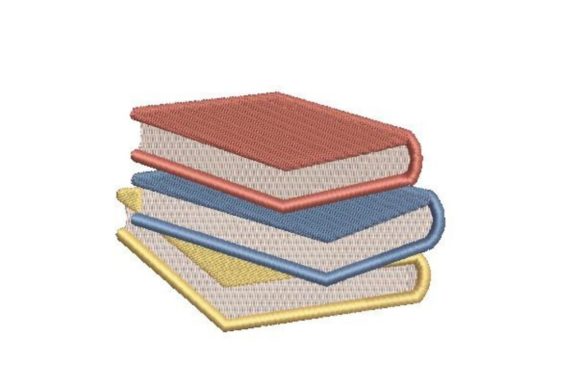
Stack of Books Embroidery Design Reviewed for Business Merch
When you run a small business, every embroidered piece you produce carries your brand identity into the world. I have spent years digitizing and testing machine embroidery designs for shops, cafés, bakeries, florists, and handmade brands, so I know firsthand that a design that looks charming on screen can fall apart on a cap front or a tote bag seam. Today I am reviewing the Stack of Books machine embroidery design as a real option for small business merchandise, custom apparel, and embroidered patches. I will walk through first impressions, practical placement, potential pitfalls, and the kind of brand story this digital embroidery file can help you tell.
First Impressions of Stack of Books as a Business Design
The Stack of Books design reads as friendly, approachable, and quietly scholarly. It does not scream for attention; instead it suggests warmth, learning, and a love for stories. For a small business owner, that visual personality opens up a surprising range of applications beyond the obvious back-to-school backpack. I see this embroidery file working beautifully for a bookstore café, a creative studio that offers workshops, a handmade stationery brand, or even a florist who wants to evoke a garden-reading nook vibe. The design feels premium without being fussy, and that balance is hard to achieve in commercial embroidery. It leans more classic and handmade than modern or minimalist, which makes it a strong asset for businesses that want to project trust, tradition, and genuine care.
Because the design is called Stack of Books, your customers will immediately associate it with reading, knowledge, and childhood nostalgia. That emotional hook is valuable for branded merchandise meant to spark conversation. Whether you stitch it onto an apron for a local bookstore or onto a cap for a tutoring service, the design carries meaning before anyone reads your logo. That is the kind of brand equity a well-chosen machine embroidery design can deliver.
How Stack of Books Performs on Real Merchandise
I have tested similar literary-themed embroidery files on a range of substrates, and I can tell you that Stack of Books has the potential to work across multiple product lines if the stitch density and thread colors are managed well. Let me break down how it performs in the most common small business merch categories.
Embroidered Patches and Apparel Accents
As an embroidered patch, this design can become a signature mark on work shirts, aprons, and caps. A patch format lets you control the finished product more tightly because you can stitch it onto a separate backing and then apply it to the garment. This is especially useful if you are producing small batches for a local bakery or a handmade soap brand. The Stack of Books patch could sit on a chest pocket, a sleeve cuff, or the center back of a denim jacket. In my experience, designs with clear outlines and moderate detail work best as patches, and this design fits that profile. You will want to check the stitch density before committing to a patch run, because dense stitching can make the edge stiff. That said, a well-digitized embroidery file should handle patch construction without trouble.
Apron Embroidery for Cafés and Bakeries
Apron embroidery is one of the highest-exposure placements for a small business. Baristas, bakers, and florists wear aprons all day, and every customer sees that design. The Stack of Books design on an apron says we value warmth and learning here. I would place it on the upper chest area or the center bib, keeping it proportional to the apron panel. Because aprons are washed frequently, you need to confirm that the thread colors are colorfast and that the stabilizer is chosen for repeated laundering. A design with too many tiny details may fade or distort over time, so I recommend testing a sample on apron fabric before you stitch a full batch.
Cap Embroidery and Curved Surfaces
Caps are notoriously tricky for embroidery because the curved surface distorts stitch angles and can cause puckering. The Stack of Books design, with its stacked rectangular shape, is actually well-suited to a cap front as long as the overall width does not exceed about 2.5 inches. You will need to review the hoop size that the embroidery file specifies and ensure your digitizer has accounted for cap curvature. If the design includes fine lines or small gaps between books, those might close up on a cap. I advise testing it on a practice cap before any production run. For a small business like a neighborhood bookstore or a literary festival, a cap with this design becomes a wearable billboard for the brand.
Tote Bag Design and Product Packaging Accents
Tote bags are a staple of small business merch. They are practical, reusable, and they carry your brand into grocery stores, farmers markets, and coffee shops. The Stack of Books design can be centered on a canvas tote or placed as a small accent near the top edge. Because tote bags are often made of thicker fabric, you may need a heavier stabilizer to prevent the stitches from sinking into the weave. If you plan to offer this design as an add-on for customers who buy a certain amount of product, it becomes a thoughtful gift that reinforces your brand identity. I have seen handmade soap brands, candle makers, and tea shops use literary designs to signal a cozy, thoughtful aesthetic. It works.
Where to Use Stack of Books with Caution
No machine embroidery design is perfect for every surface. Here are the areas where I would proceed carefully with the Stack of Books file.
- Small patch sizes under two inches: If you scale the design down too much, the individual book spines may lose definition and become a blur of thread. Always test at the intended finished size before cutting production.
- Cap fronts with high crown curvature: As I mentioned, curved surfaces can distort stacked shapes. Make sure the digitizer has compensated for cap geometry, or else the books may look misaligned.
- Dark uniform fabrics with detailed outlines: The design may rely on subtle color changes between books. On a dark background, you will need a light underlay or a thick outline to make the shapes pop. Test thread color contrast against your actual fabric.
- Items that need frequent washing: Aprons, caps, and tote bags that go through commercial laundry can fade or fray. Use high-quality thread and a cutaway stabilizer to extend the life of the finished product.
- Textured fabrics like fleece or terry: These fabrics absorb stitches and can make fine details disappear. If you want to embroider on a sweatshirt or a fleece jacket, consider enlarging the design slightly.
How Stack of Books Affects Brand Identity and Customer Trust
Every stitch you put on a product tells a story about your business. When you choose the Stack of Books design, you are telling customers that your brand values knowledge, comfort, and timelessness. That is a powerful message for a small business trying to build recognition. A well-placed embroidered patch or chest logo can elevate a simple apron or tote bag from a utility item to a handmade product that people want to be seen wearing. That visual consistency across your staff uniforms, retail merch, and event giveaways builds trust. Customers begin to associate the Stack of Books motif with your specific brand, which is exactly what small business merch should do.
For Etsy sellers and handmade brands, this embroidery file can also be used in printable mockups to show customers how a finished product will look. A mockup with the Stack of Books design on a tote or apron helps buyers visualize the item before purchase. That reduces uncertainty and increases conversion. I always recommend creating at least one mockup for client approval before stitching, especially when you are working with a new embroidery file for the first time.
Practical Designer Notes for Production
Before you run a batch of Stack of Books patches or apparel, here are the steps I take in my own shop when reviewing a new digital embroidery file for commercial use.
- Test it in black and white first. Stitch out a single sample using one thread color to evaluate the stitch density, underlay, and overall shape. This reveals any digitizing issues without wasting multiple thread colors.
- Check if it works at small patch size. If you plan to use it as a cap accent or a sleeve detail, scale it down in your software and test again. Some embroidery files lose integrity when reduced.
- Review thread color contrast. The design description does not specify exact thread colors, so you should select shades that will read clearly on your chosen fabric. Light books on a dark background or dark books on a light background will give the best definition.
- Inspect spacing between elements. The books should have enough gap that they do not merge into one blob when stitched. If the spacing is too tight, ask your digitizer to adjust pull compensation.
- Confirm hoop size. Make sure the design fits within your available hoops. If it is too large for a cap hoop, you may need to resize or split the design.
- Test on real fabric. Every fabric behaves differently. Stitch a sample on the exact material you will use for production, whether it is cotton twill, canvas, denim, or polyester.
- Use proper stabilizer. For most apparel applications, a tear-away stabilizer works well. For patches or dense designs, use a cutaway stabilizer to prevent distortion.
- Create a mockup for client approval. Show your client how the Stack of Books design will look on their actual product before stitching the full order. This prevents costly mistakes.
- Compare it beside other design assets. If you already have a logo or other embroidery files, stitch them side by side to ensure visual consistency across your brand identity.
- Confirm commercial licensing. The product description states that the design comes with multiple embroidery file formats and can be used with multiple embroidery machines. However, always verify the specific license terms for commercial use before stitching items for sale. Some digital embroidery files are for personal use only, and using them commercially could violate copyright.
Final Thoughts on Stack of Books for Small Business Merch
The Stack of Books machine embroidery design offers real potential for small business owners who want to project warmth, intelligence, and handmade quality. It works across apron embroidery, cap embroidery, tote bag design, embroidered patches, and custom apparel. It is especially well-suited for bookstores, cafés, creative studios, tutoring services, and any brand that wants to associate itself with learning and comfort. That said, like all embroidery files, it requires careful testing on your specific fabric and at your intended finished size. Pay attention to stitch density, thread color contrast, hoop size, and stabilizer choices. With proper preparation, this design can become a signature element in your brand identity that customers recognize and trust. Whether you stitch it onto staff uniforms, tote bags, or limited-edition patches, the Stack of Books design delivers a classic, inviting look that supports your business goals. Test it, refine it, and then let it represent your brand with every stitch.